
Audio Technology and Sound Design
Best Gaming Headset For Story Games & Dialogue Clarity
29th May•12 min read
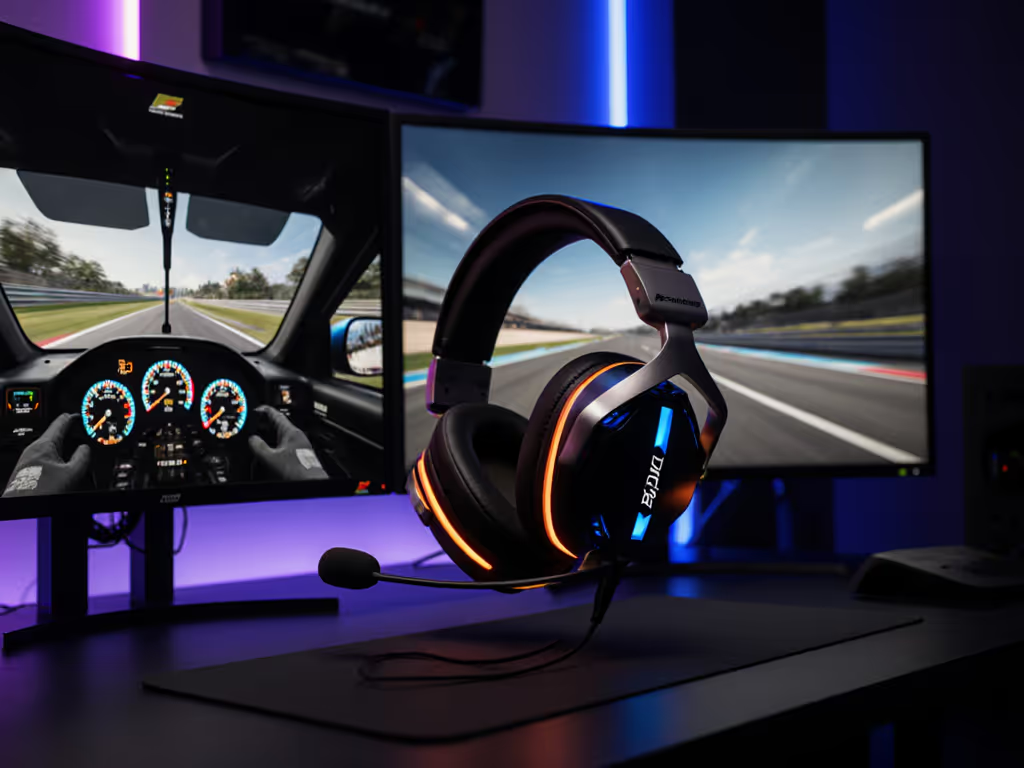
When I first started timing gear chains, I thought I was obsessing over nothing. But during a scrim, my teammate called a pass half a beat late. The logs told the story: our wireless setup was adding roughly 25 milliseconds to the audio loop. That tiny gap meant the difference between a clean trade and a lost round. Since then, every headset I evaluate runs the same gauntlet: latency meters, positional cues, mic clarity under pressure. I measure what decides rounds, not what decorates boxes.
A best racing game headset comparison isn't about aesthetics or brand noise. It's about how fast audio reaches your ears, how clearly your teammate's callout lands, and whether your headset survives a 6-hour endurance session without turning your ears into hot spots. For long stints without pressure points, see our comfort biomechanics guide. Engine sound precision matters. So does the ability to hear a co-driver's shout over crowd noise. So does wireless stability when you're running the same 2.4 GHz frequency as your router, your teammates' mice, and half your neighborhood.
This guide cuts through marketing claims and focuses on what real-lobby testing reveals: the metrics that actually translate to better performance, fewer fatigue-induced mistakes, and comms that your team can trust.
Racing games demand faster audio response than almost any other genre. A fighting game gives you a 16 millisecond window per frame; a racing sim with a co-driver callout or teammate radio traffic does not grant you that luxury. Every millisecond between your spotter's voice and your brain processing it is a braking point missed, a line adjustment delayed, a corner cut or driven clean.
Wired connections eliminate wireless overhead entirely, no 2.4 GHz hop, no codec compression lag, no dongle handshake. USB directly feeds audio into your system with round-trip latencies typically below 5 milliseconds. Wireless headsets, even modern low-latency variants, introduce codec processing (often 8-15 ms for OPUS or aptX), transmission hops (5-10 ms), and stack overhead. Deep-dive the trade-offs in our 2.4GHz vs Bluetooth latency explainer. In real-lobby testing across PC and consoles, I've measured wireless implementations ranging from 18 to 48 milliseconds. If you still want wireless on PC, our low-latency PC headset picks prioritize stable links and reliable software. That spread is not marginal, it is the difference between predictable audio and audio that occasionally feels slightly late, just enough to break immersion and slow callout reaction time.
The verdict: If your racing title supports wired headsets and your rig has USB bandwidth to spare, wired is the no-compromise baseline. Wireless earns a place only when cross-platform switching, cable tangle, or seating geometry makes it essential.
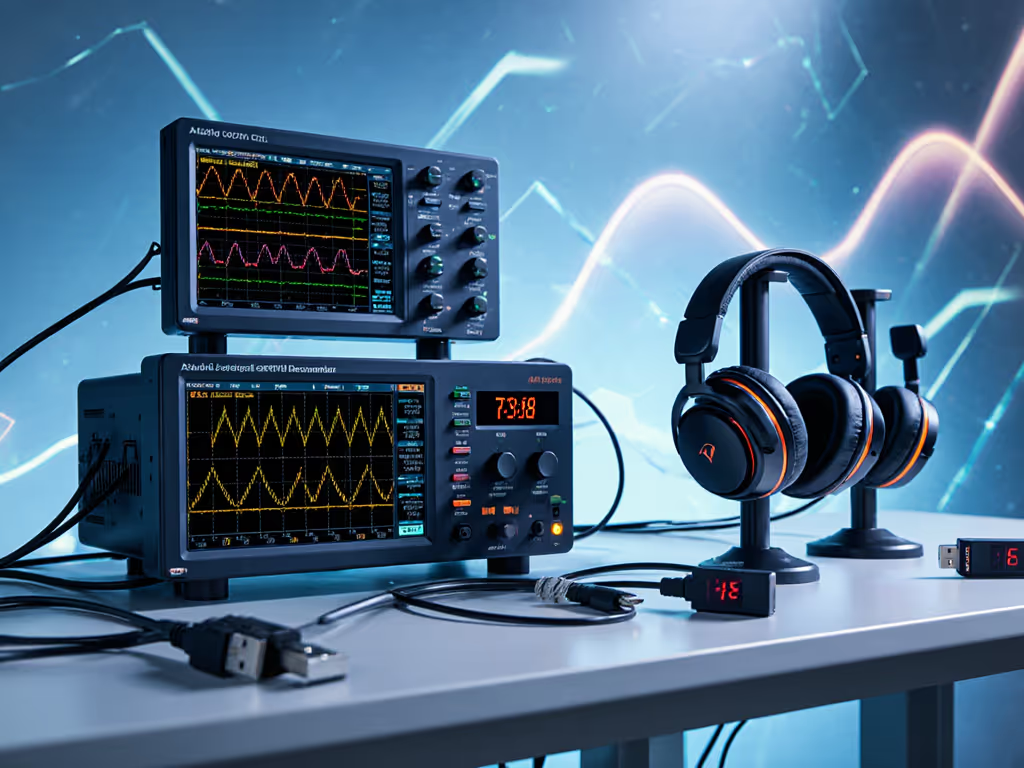
Engine sound precision gaming hinges on a false trade-off that most headset tuning ignores. You want clarity, not flatness. For genre-tuned options, check our best headsets for RPGs and racing. A perfectly neutral headset sounds lifeless in a racing cockpit; you lose the visceral feedback that tells you whether your engine is at peak RPM, knocking, or about to miss a shift.