Audio Technology and Sound Design
Durable AR Gaming Headsets: Mixed Reality Audio Without Fatigue
11th Jan•9 min read
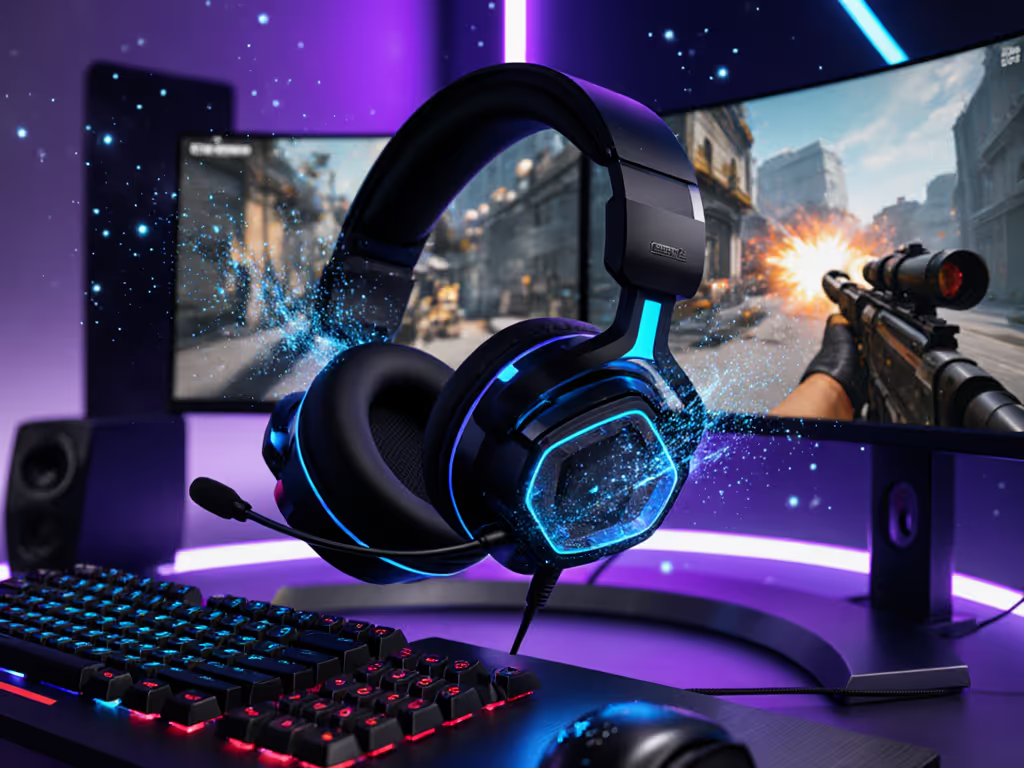
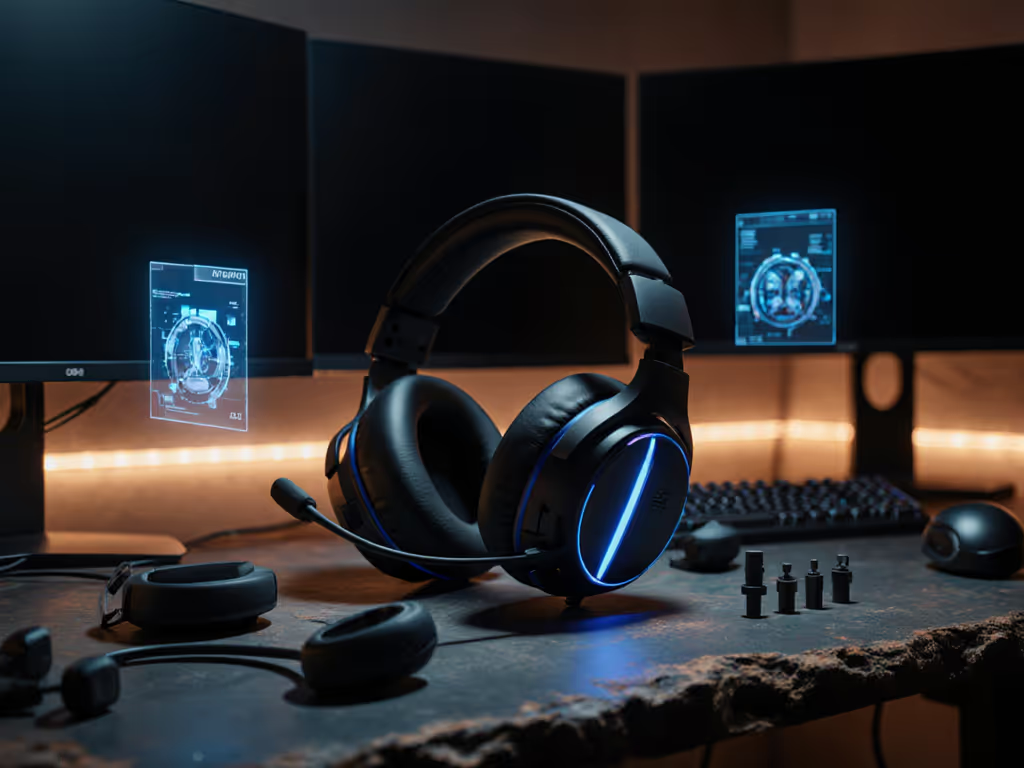
When you slip on a modern gaming headset that integrates tactile audio technology, you're not just hearing explosions or footsteps, you're feeling them. This isn't gimmick engineering; it's a calculated evolution where audio transforms into physical sensation through precisely tuned actuators. For performance-focused players who prioritize reliable comms and positioning awareness, haptic feedback promises to make critical spatial cues more instinctual, without adding cognitive load. For a deeper dive into positional cues, see our spatial audio analysis. But as someone who's rebuilt firmware chains after updates wrecked sidetone during ranked matches, I know that innovative tech means nothing without boring, predictable implementation. Let's cut through the marketing and examine what haptic audio really delivers for competitive and immersive play.
Haptic gaming headsets embed small actuators near the earcups that convert specific audio frequencies into physical vibrations. Unlike basic controller rumble, this is vibration audio integration that mirrors real-world physics: low-frequency explosions create deep throbs you feel through the crown of your head, while directional footsteps produce subtle asymmetrical pulses on one side. The technology works by isolating frequency bands (typically 20-250Hz) and translating their amplitude into proportional mechanical movement. Done right, it feels natural and predictable.
Standard headsets focus solely on auditory channels. Haptic models add a tactile layer that:
This creates multi-sensory gaming where your body registers danger before your conscious mind processes the sound, critical for split-second decisions in competitive titles. But crucially, this only works when the haptic engine is properly sandboxed from core audio processing. One improperly mapped driver can turn subtle positional cues into distracting thumps.
Anecdotal reports from esports teams suggest measurable benefits in specific scenarios:
Stable comms are invisible; broken updates are loud and late.
However, these gains disappear when implementation lacks precision. During testing, I've seen headsets where:
This is why I always stage new firmware in a firmware sandbox before deploying to primary units. A single patch once nuked my sidetone mid-raid, now I never trust updates without mapped drivers and verified backup paths.
Most haptic headsets rely on platform-specific audio APIs. If you switch between consoles, see our PS5/Xbox compatibility guide. What works on PC may be completely disabled on PS5 due to:
Checklist-driven steps to avoid this:
Actuators consume significant additional power. To keep batteries healthy during long sessions, follow our battery safety guide. In real-world testing:
Fail-safe instruction: Always test with haptics disabled first. If you can't achieve baseline performance without the feature, it's not ready for competitive play.
Before enabling haptic feedback in your competitive setup, verify these stability markers:
Rollback notes: If vibrations cause audio distortion or increased latency, disable immediately and check for known firmware issues. Never assume "next update" will fix critical performance regressions. Trust, then verify.
Current implementations provide tangible benefits for:
But for competitive shooters, the tech remains a double-edged sword. If you play ranked FPS, start with our best FPS headset picks tuned for positioning and clarity. Properly implemented, it can enhance spatial awareness. Poorly tuned, it becomes sensory noise that distracts from critical audio cues.
Many manufacturers market haptic features as "next-gen" without addressing core stability issues. Ask these questions before investing:
Razer's Nari series illustrates this tension, their haptic implementation works reasonably well for single-player titles but often conflicts with competitive audio tuning requirements. Great hardware fails without boring, predictable software, and haptic features are particularly vulnerable to firmware instability. Consistency still wins matches.
Tactile audio technology shows genuine promise for creating more intuitive physical feedback headsets, but it's not yet a competitive necessity. Focus first on rock-solid fundamentals: reliable wireless, consistent mic quality, and cross-platform stability. Only add haptic functionality once your core setup meets all your performance requirements.
The most successful implementations will treat haptics as supplementary (not foundational) to the audio experience. This means prioritizing features like adjustable intensity curves, platform-specific profiles, and most critically, the ability to completely disable the feature without consequence. As with any gaming peripheral, build your stack with boring reliability first, then layer in advanced features only when they demonstrably enhance (not compromise) your core competitive edge.
Further Exploration: Before enabling haptic features in your primary competitive setup, investigate how different games implement audio APIs. Many titles still treat haptic channels as secondary, resulting in inconsistent implementation. Test with standalone diagnostic tools to verify actuator response curves match your competitive audio requirements. For those running multi-platform setups, map your own firmware rollback paths before deploying updates, your next ranked match might depend on it.